 Rhumb
Three lights on one rock
The Eddystone, and how quickly a guess became a form.
The Eddystone is a reef of red rock fourteen miles off Plymouth, awash at high water and directly in the path of ships making for the English Channel. For as long as there has been shipping there, it has been wrecking it.
Winstanley’s tower
The first light on the rock was finished in 1698 by Henry Winstanley, a showman and engraver who had lost money in two ships that struck it. His tower looked like something from a fairground, with galleries, a weathervane and a great deal of ornamental ironwork, and nobody had ever built anything like it in the open sea.
It stood for five years. Winstanley was so confident in it that he said he hoped to be inside during the greatest storm there ever was. In November 1703 he was, making repairs, when the Great Storm struck southern England. In the morning the rock was bare.
Rudyerd’s tower
The second light was built of timber by John Rudyerd, a silk merchant, and first lit in 1709. It was plainer and far stronger, and it lasted nearly half a century. In 1755 the lantern caught fire, and the tower burned down to the rock.
Smeaton’s tower
The light that taught the world how to do it was the third, completed by John Smeaton in 1759. He shaped it like the trunk of an oak, broad at the foot and curving inward, and built it of granite blocks cut to dovetail into one another, so that the whole tower was in effect a single stone.
It stood for well over a century and was only replaced because the rock beneath it had begun to wear away. The upper part was taken down and rebuilt on Plymouth Hoe, where you can still climb it.
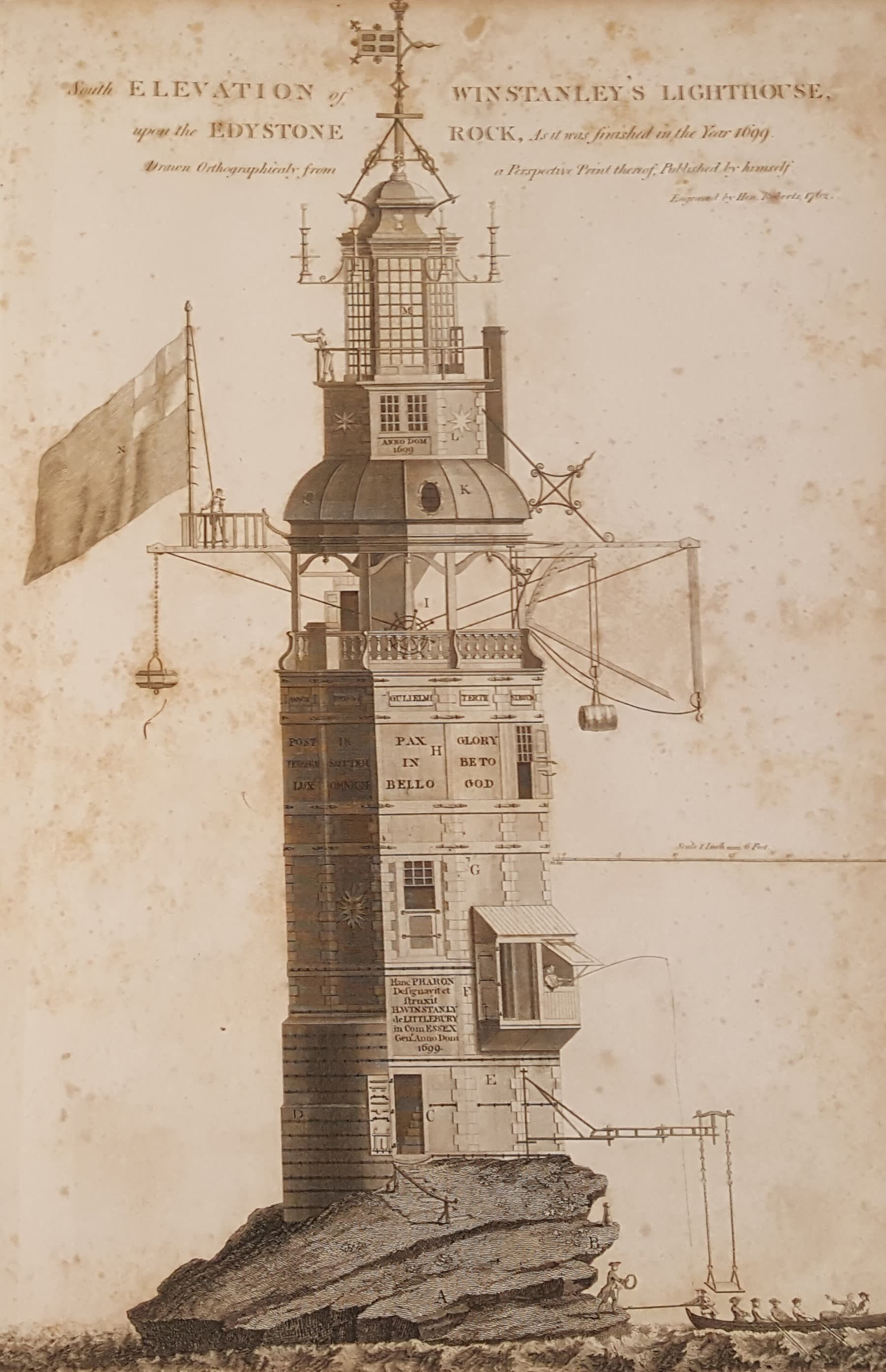
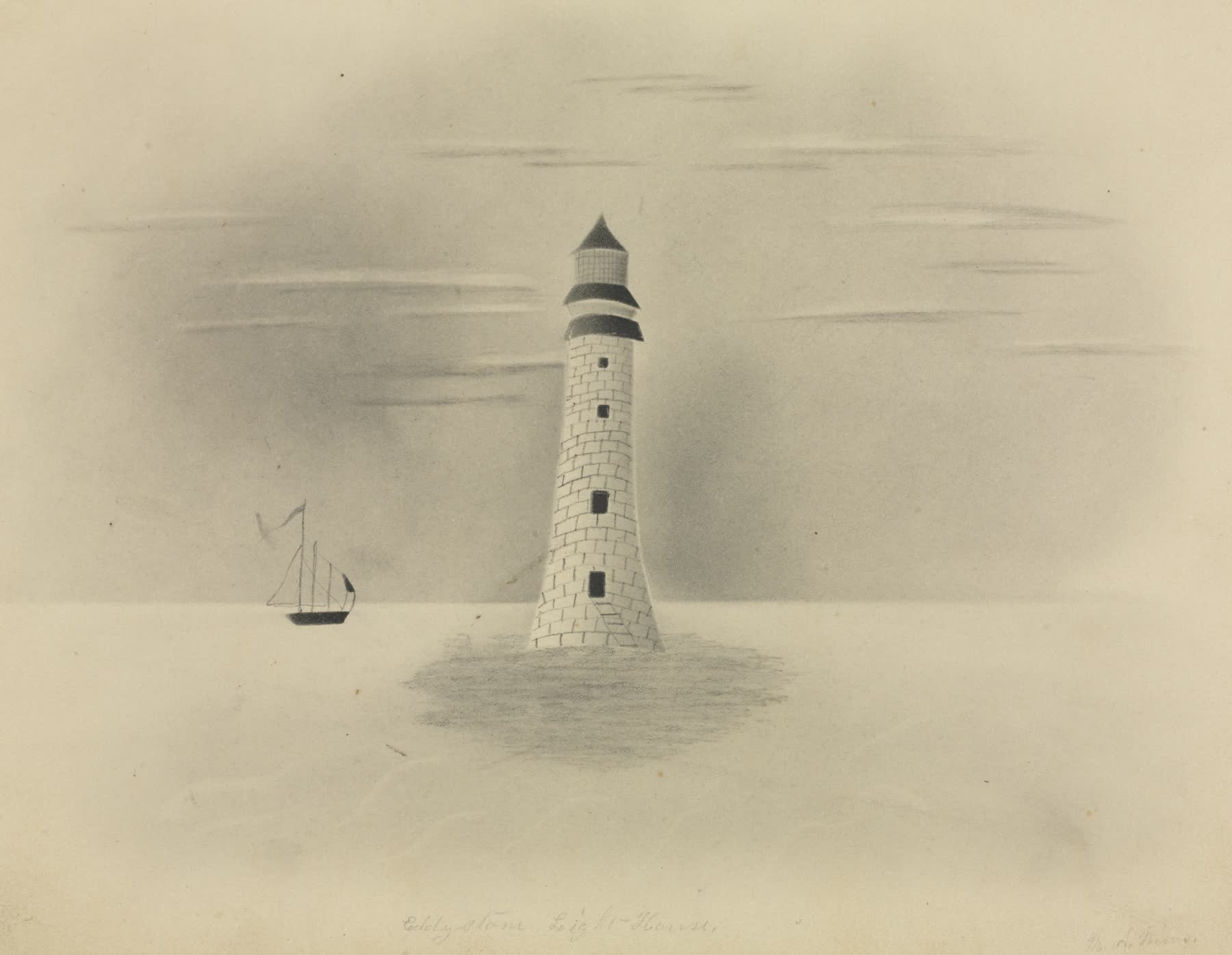
What I notice, looking at the pictures side by side, is how quickly the form settled. Winstanley’s tower is a guess. Within sixty years the guess had become the tapering stone column that everyone now draws when they are asked to draw a lighthouse.