 Rhumb
Inside the islands III: Over the watershed
Across the flats to Harlingen, on the top of the tide.
There are two ways from the Vlie to Harlingen. One is the buoyed channel, deep and wide, that the ferries use. The other crosses the flats.
The flats are the reason people come here. For a few hours either side of low water, most of the Wadden Sea is not sea at all but a brown plain of sand and mud, with seals lying on it and birds walking about. Then the tide returns and covers the whole of it to the depth of a tall man. A boat that draws little enough can cross on the top of that tide, by a line of thin branches stuck in the mud to mark the way.
The watershed
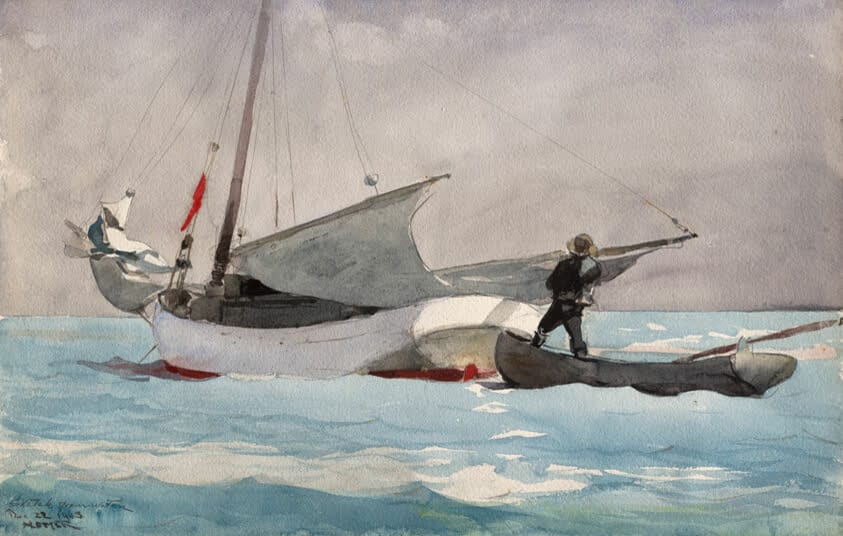
Every such route has a high point, called the wantij, where the flood that came in round one end of an island meets the flood that came round the other. It is the shallowest part of the crossing, and you must be over it at high water or thereabouts.
Be early and there is not enough water. Be late and the tide is already falling away from under you. We arrived twenty minutes ahead of time and went across at walking pace with half a metre under the keel, watching the branches go by like a slow fence.
Arriving
Harlingen appears as a church tower, then a row of roofs, then a harbour wall with people on it eating ice cream. Three days out, forty miles made good, none of them in a straight line.
I have made faster passages and remembered them less. This one had to be done at the sea’s own pace, in the hours it allowed, and I think that is why every mile of it stayed with me.